Navigating Australia’s Return to Work Barriers
Coming back to work after time away can feel like a lot.
People step out of work for many reasons, such as:
- raising children
- recovering from an injury
- managing a long-term health condition
Even when you’re ready to return, the process is not always easy.
Here’s why this matters:
- In 2024–25, around 1.2 million Australians wanted a job but were not able to enter the workforce.
- The data comes from the Australian Bureau of Statistics (ABS).
- Many of these people have strong skills, useful experience, and a real desire to work.
- But personal challenges and wider system issues are still getting in the way.
Why do these barriers matter?
Because once you understand what is getting in the way, you can start to deal with it.
In this guide, we’ll look at:
- the main reasons many Australians struggle to return to work
- practical ways to work through those challenges
- recent labour and workplace data that helps explain the bigger picture
The goal is simple: to give you a clear, realistic path back into work.
Identifying Common Barriers
People face many different challenges when trying to return to work.
But the data shows a few common patterns.
These shared barriers matter because they:
- help explain why returning to work can feel so hard
- show that many people are dealing with the same issues
- make it easier to see where support is needed most
The good news? Once you can name the barrier, it becomes easier to work on a solution.
Childcare logistics and family responsibilities
For many people, especially women, family responsibilities can make returning to work much harder.
Key ABS findings from 2024–25:
- 43% of women said caring for children was the main reason they could not start work right away.
- For mothers with children under 15, that number rose to 70%.
Childcare is not just a small issue. For many parents, it is the biggest barrier.
Here’s why:
- Some children are too young for standard care options.
- Others may be too old for daycare but still need supervision.
- Childcare costs can be so high that going back to work does not feel worth it financially.
There is also the timing issue.
Many jobs follow standard work hours. But childcare options do not always match those hours. When care is hard to find, too expensive, or does not fit the schedule, returning to work can feel out of reach both financially and practically.
Health conditions and psychological injuries
Health can also be a major barrier to returning to work, especially for men.
Key ABS finding:
- 39% of men said a long-term health condition or disability was the main reason they were not able to start work right away.
Safe Work Australia’s 2025 National Return to Work Survey shows another important challenge.
Return-to-work rates are falling
- In 2025, the national return-to-work rate was 88.9%.
- In 2021, it was 91.6%.
That drop may seem small, but it matters.
The type of injury also makes a big difference
- Workers with physical injuries had a return-to-work rate of 90.2%.
- Workers with psychological injuries had a much lower rate of 76.5%.
This gap highlights an important point:
Returning to work after a psychological injury is often much harder. Recovery can take longer, and going back into a work setting after trauma, stress, or burnout can be especially challenging.
Skill gaps and confidence loss
Time away from work can create a real or perceived skills gap.
Why? Because workplaces change fast. For example:
- software gets updated
- rules and regulations change
- best practices shift over time
After a break, many people feel like they are no longer up to date. That can make returning to work feel daunting.
Many Australians say one of the biggest challenges is not having:
- the right training
- the needed qualifications
- recent work experience
This skills gap can affect more than job options. It can also hurt confidence.
Many people start to wonder:
- Am I still good enough?
- Have I fallen too far behind?
- Can I really catch up?
These thoughts are common. And they can make returning to work feel even harder.
Workplace environment and productivity fears
Sometimes the real barrier is not your ability to do the job.
It is the fear of the workplace you may be going back to.
For many people, the worry is:
- too much pressure
- too little support
- an environment that feels stressful from day one
Recent workplace productivity data shows that some work settings can make it much harder for people to stay well and do their best.
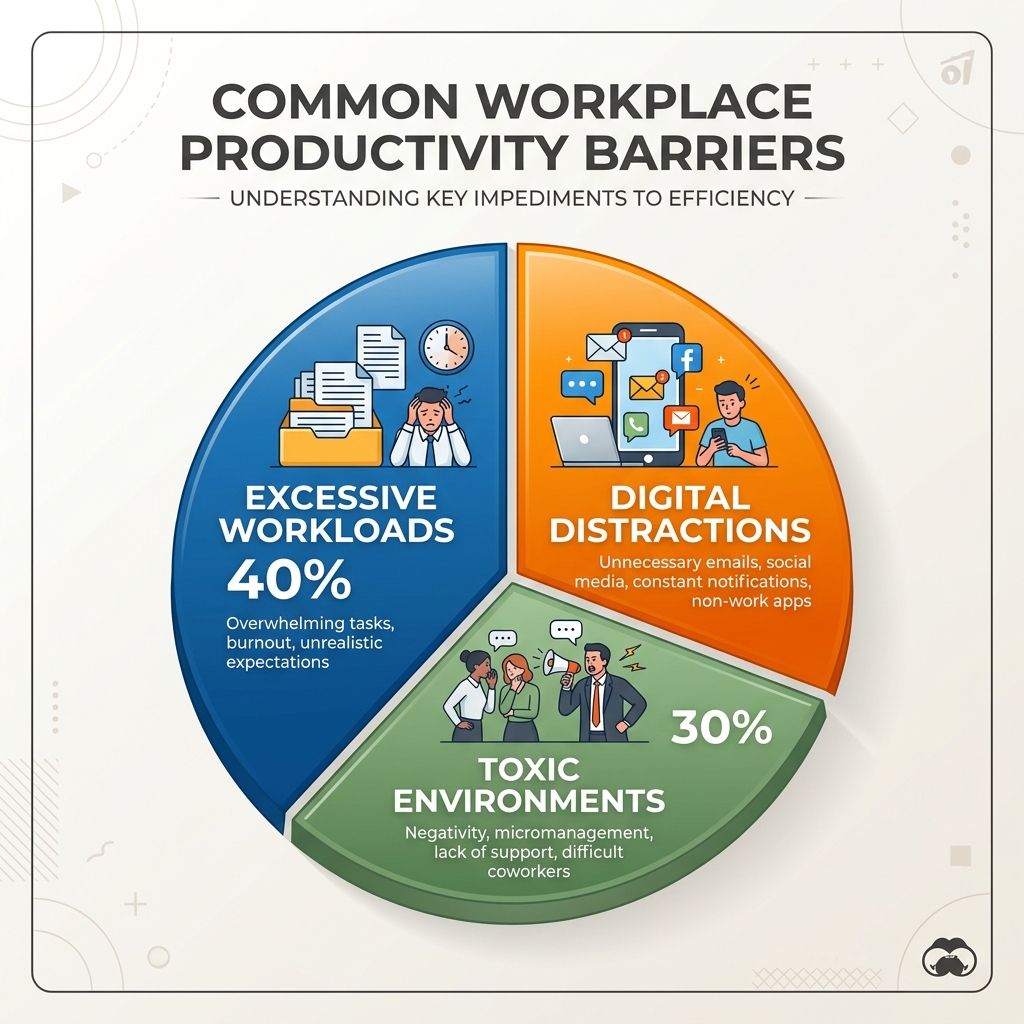
Here are the three main workplace issues that can affect productivity and make returning to work feel harder:
- Excessive workloads (40%): Overwhelming tasks, widespread burnout, and unrealistic management expectations create an environment where success feels impossible.
- Digital distractions (30%): Unnecessary emails, constant notifications, social media, and non-work apps fracture focus and extend the working day unnecessarily.
- Toxic environments (30%): Pervasive negativity, aggressive micromanagement, a severe lack of support, and difficult coworkers make daily attendance exhausting.
That is why many people feel unsure about going back.
Common fears include:
- leaving a home routine that feels safe and manageable
- returning to a job with too much pressure
- ending up burnt out soon after coming back
These concerns are real and valid.
Strategies for Overcoming Barriers
Here’s the key thing to remember:
Knowing the barrier is only the first step.
The next step is to find practical ways to move past it.
What helps will depend on your situation, but the goal is the same:
- make the return to work feel more manageable
- reduce stress
- build confidence step by step
Addressing childcare challenges
If childcare is your main barrier, look for flexibility first.
Why this matters:
- The ABS found that 54% of unemployed mothers said being able to work school hours was a key factor in returning to work.
When job hunting, prioritise roles that fit around your family schedule.
Start with flexibility.
Look for options like:
- flexible hours
- hybrid work
- job-sharing
- compressed work weeks
Many Australian employers now offer these arrangements, and they can make a big difference.
You should also check what childcare support is available.
Government childcare subsidies may help reduce costs, so it is worth finding out what you can claim.
If a full return feels too hard right now, consider starting part-time.
A part-time role can help you:
- build a steady routine
- manage school or care schedules more easily
- return to work without taking on too much at once
Working set days and hours can make life feel more predictable while you rebuild confidence and settle back into your career.
Managing health and recovery
Coming back after an illness or injury takes time.
The best approach is usually:
- go step by step
- be patient with yourself
- get the right support around you
If you are recovering from a physical or psychological injury, stay in close contact with:
- your medical team
- your rehabilitation coordinator
A phased return is often the best way to ease back into work.
What does that look like?
- start with fewer hours
- take on lighter or limited duties
- increase your workload slowly as your capacity improves
Why does this matter?
- it gives your body and mind time to adjust
- it lowers the risk of feeling overwhelmed too soon
- it can make your return more sustainable
Safe Work Australia data also shows something important:
- workers are more likely to return successfully when employers support them early
- that support matters even before a formal claim is lodged
One more key step: be honest with your manager.
Talk openly about your:
- physical capacity
- mental capacity
- current limits
- support needs
Clear communication can help create a return-to-work plan that is realistic, supportive, and easier to maintain.
Bridging the skills gap
Closing a skills gap starts with small, practical steps. You do not need to go back for a multi-year university degree to become job-ready again.
A good first step is to look for simple ways to update your skills.
Options include:
- micro-credentials
- short courses
- industry-specific certificates
You can explore learning through:
- LinkedIn Learning
- Coursera
- local TAFE programs
These options can help you build skills in areas that are in demand, without making a huge commitment.
It also helps to rethink how you talk about your experience.
Focus on your transferable skills in your resume.
For example:
- managing a household budget shows financial administration skills
- organising medical care for a family member shows planning, coordination, and scheduling skills
Time away from paid work does not mean time without value.
It may have looked different, but you were still building useful skills and experience.
Practical Tips for a Smooth Transition
A smoother return starts with good preparation.
Before your first day back, focus on a few simple steps:
- plan ahead
- take things one step at a time
- avoid putting too much pressure on yourself
This can help you:
- feel less anxious
- stay more in control
- make the transition easier to manage
Communicate your boundaries clearly
Setting boundaries early really matters.
Why? Because 40% of workplace productivity barriers come from excessive workloads.
When you return to work, have a clear conversation with your manager about:
- expectations
- working hours
- what you can realistically take on
It also helps to agree on clear goals for your:
- first 30 days
- first 60 days
- first 90 days
Keep those goals realistic.
If you are returning part-time, make sure your workload matches your hours. A part-time role should not come with full-time expectations squeezed into fewer days.
Manage digital distractions
Digital distractions make it harder to settle back into work. In fact, they account for 30% of workplace inefficiency.
To make things easier from day one:
- turn off non-essential desktop notifications
- check emails at set times instead of all day
- use focus apps when you need to concentrate
- switch your status to “Do Not Disturb” during deep work
These small habits can lower stress and help you stay focused.
Rebuild your professional network
Your professional network can make a big difference when you are getting ready to return to work.
Before you start applying, try to reconnect with people you already know, such as:
- former colleagues
- mentors
- people in your industry
You can do this in simple ways:
- meet for a casual coffee
- set up a quick virtual chat
- update your LinkedIn profile
- comment on or share relevant industry content
Why does this help?
A strong network can:
- point you toward employers who offer flexibility and support
- give you advice when you feel unsure
- help you hear about roles before they are widely advertised
You do not need to do everything at once.
Start with one conversation.
Sometimes that is enough to open the first door.
The Role of Support Systems and Employers
Returning to work should not be something you have to manage on your own.
Support matters from:
- employers
- family and friends
- professional networks
- outside services
All of these can make the move back to work feel easier, smoother, and more realistic.
How employers can facilitate the return
Employers need to do more than offer a job. They need to create a workplace that feels welcoming and workable for people returning to employment.
Why does this matter?
ABS data shows that flexibility is especially important for women returning to work.
Supportive employers can make a big difference by offering:
- part-time roles
- flexible start and finish times
- work-from-home options
These changes do not just help returning workers.
They also help employers attract a broader and highly skilled talent pool.
Employers also need to deal with toxic work environments, which account for 30% of productivity loss.
That means creating a workplace where people feel safe, supported, and respected.
This can include:
- reducing micromanagement
- dealing with negative behaviour quickly
- making sure leaders show healthy work-life boundaries
When people feel supported at work:
- trust grows
- psychological safety improves
- staff are more likely to stay
Utilising external support networks
You do not have to do this alone.
There are external supports that can help, including:
- Australian Government programs for job seekers
- support services for people with disability or long-term health conditions
- return-to-work coordinators
- vocational rehabilitation providers
- career counsellors
These supports can help in practical ways.
For example:
- a return-to-work coordinator can help you and your employer stay on the same page
- a vocational rehabilitation provider can help make sure the right workplace adjustments are in place
- a career counsellor can help you find roles that suit your current skills, goals, and lifestyle
If you need support, it is okay to ask for it. Sometimes the right help can make the path back to work feel much more manageable.
Frequently Asked Questions (FAQ)
What is the most common barrier for women returning to work in Australia?
According to ABS data from 2024–25, the biggest barrier is caring for children.
Here are the key points:
- 43% of women said childcare was the main reason they could not start work right away.
- A lack of flexible work hours makes returning harder.
- The high cost of childcare is also a major issue.
For many women, this is not just a scheduling problem. It is also a financial one.
How do return-to-work rates differ between physical and psychological injuries?
Safe Work Australia’s 2025 survey shows a clear gap.
- Workers with physical injuries had a return-to-work rate of 90.2%.
- Workers with psychological injuries had a much lower rate of 76.5%.
This shows that returning to work after a psychological injury can be harder and may take more time and support.
How can I handle an excessive workload when returning part-time?
Start with a clear conversation.
Before you begin, talk with your manager about:
- your main priorities
- what success looks like
- how much work fits into your part-time hours
This matters because excessive workloads account for 40% of workplace productivity barriers.
Keep one key point in mind:
- your workload should match your agreed hours
- a part-time role should not come with full-time expectations
If the workload feels too heavy, speak up early. Clear expectations can help protect your time, energy, and wellbeing.
Next Steps for Your Career Comeback
Coming back to work after time away can feel hard.
You may be dealing with:
- practical challenges
- low confidence
- worries about the kind of workplace you are returning to
But here is the good news:
- once you know what is getting in the way
- you can start to work through it
- one step at a time
The goal is not to fix everything at once.
It is to identify your barriers and deal with them in a clear, manageable way.
Start Small and Keep It Simple
You do not need to do everything at once.
Start with one small step, such as:
- reviewing your current skills
- choosing one short course to complete this month
- reaching out to a former colleague for a casual chat
- looking into childcare options
- speaking with your medical provider about a phased return plan
Remember:
- you already have resilience
- you already have valuable experience
- the Australian workforce needs both
Take the first step today.
Then keep going, one step at a time, toward a career that fits the life you want.